How to Plan Your Week: A 20-Minute Sunday Planning Routine
Plan your week in 20 minutes: brain-dump, check your calendar, pick 3 priorities, set one daily focus, block time and review on Friday.

Plan your week in 20 minutes: brain-dump, check your calendar, pick 3 priorities, set one daily focus, block time and review on Friday.
A simple 7-step January budget reset: review last year, tackle holiday bills, set goals, build a zero-based budget, add sinking funds and track weekly.
A simple 7-step system to plan your new year: review, pick 2-3 goals, break them into monthly milestones and weekly actions, track habits and review weekly.
A simple 5-step holiday budget: pick a total, list every category, give every dollar a job, set gift limits and track as you spend.
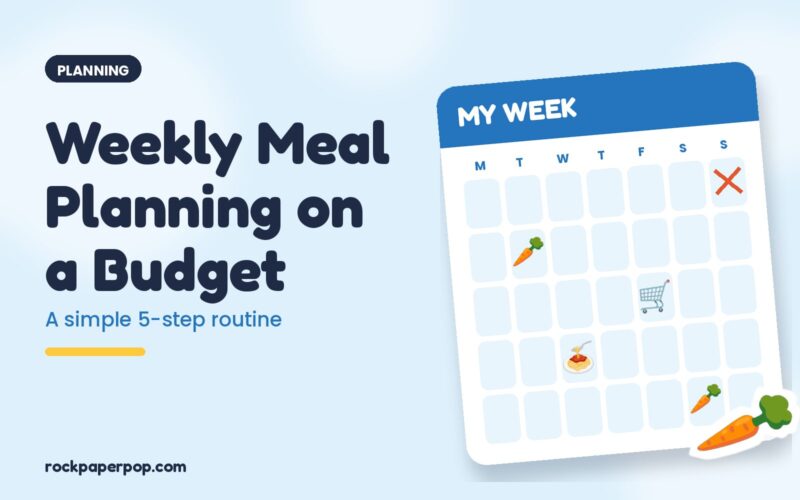
Plan meals around what you already have, check sales, plan leftovers, write one grocery list by store section and stick to it. A printable weekly meal planner keeps the whole routine on one page.
A bullet journal is a flexible notebook system: an index, a future log, monthly and daily logs, and quick bullet symbols. Here is a beginner setup that stays simple, plus easy ways to decorate it with stickers.
A family command center is one spot, usually by the kitchen or entryway, where the calendar, meal plan, to-dos, chores and school papers live. Printables make it cheap to set up and easy to refresh.
Pick one to three small habits, make them easy to start, track them with one box per day and review weekly. A habit tracker turns progress you cannot see into a chain you can.
Writing tasks down frees up mental space, a weekly view helps you plan realistically, and stickers make important things easy to spot and fun to keep up with. Here is how to build a simple system that sticks.
Paper planners are great for focus and memory; digital planners win on flexibility and portability. Many people use a hybrid: printed weekly pages plus a tablet for long-term notes. Here is how to choose.